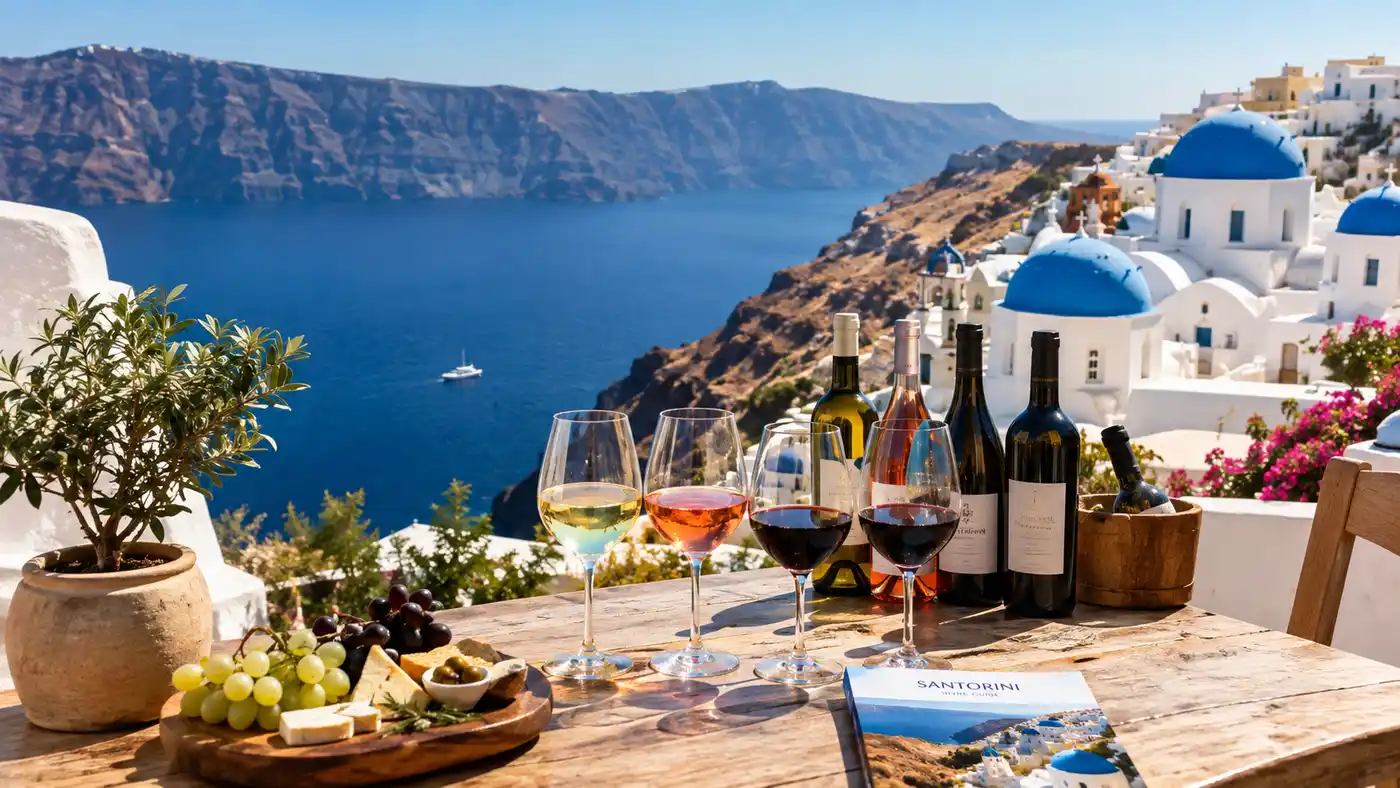
Santorini Wine Guide: Varieties and Local Grapes
The first glass of santorini wine I ever tasted was poured in a drafty taverna in Megalochori on a blustery April afternoon. It was an Assyrtiko, pale as ditch water, smelling of crushed seashells, raw lemon peel, and dry dust. One sip and my jaw tightened against a ferocious wall of acidity. It was bone-dry, lean, and completely stripped of the soft melon flavors people expect from Mediterranean whites. I was hooked before the grilled sardines even reached our wooden table.
Most visitors know this island for sugar-cube houses perched along black cliffs, blue domes, and cruise ship herds choking the alleys of Fira. Step back from the caldera rim, though, and you walk straight into one of the strangest wine regions anywhere on the planet. The vines do not look like vines, the soil is basically crushed volcanic rock without a drop of clay, and rain rarely falls between April and October. To really understand the wine from Santorini, you need to understand the punishing landscape and the stubborn native grapes that learned to survive it.
The Volcanic Crucible: Why Santorini Wines Taste So Different
The vines here grow in ash, pumice, and fragmented basalt left behind by the catastrophic Minoan eruption around 1620 BC. Locals call this gritty mixture aspa. Because there is virtually no organic matter or clay in the ground, the phylloxera aphid could never survive here. That little insect wiped out most of Europe's vineyards in the nineteenth century, forcing growers elsewhere to graft onto American rootstocks. Santorini was spared entirely.
The vines on this island are ungrafted, sitting on their original root systems. Some roots run four centuries deep. When a vine gets too old or woody, farmers simply cut the trunk at the surface and train a new shoot up from the original root crown. It is wild to stand in a dusty vineyard in Pyrgos and realize you are touching plant material that was quietly photosynthesizing during the Renaissance.
Note: Walking through an island vineyard does not feel like visiting Napa or Bordeaux. The vines sit right on the dusty volcanic pumice in tangled circular nests, so mind your ankles because loose stones roll easily underfoot.
Then there is the wind. The Meltemi blows across the Aegean in the dead of summer, whipping down over the caldera with enough force to snap trellis posts. To keep their grapes from being shredded by blowing sand and scorched by the sun, island growers developed the kouloura method. They weave the woody canes into tight, low-slung baskets that sit flat against the dirt. The grapes grow inside this woven bird nest, protected from brutal gales and shaded from the baking sun.
Water is another miracle here. The island receives less than 350 millimeters of rain in an average year, and there are zero natural rivers. How do the plants survive? Night fog rolls off the caldera, drifting inland across the plains. The porous pumice stones absorb this dense moisture like tiny sponges, slowly releasing water vapor to the roots when the scorching morning sun rises. Every bottle of greek wine from santorini is essentially distilled sea mist and rock dust.
Book your santorini wine tasting experience:
Assyrtiko: The Undisputed King of the Island
Assyrtiko accounts for roughly 75 to 80 percent of all grapes harvested across the island. It is the grape that put Santorini on the global sommelier map, and for good reason. Most white varieties lose their acidity when grown in hot climates, becoming flabby, alcoholic, and flat. Assyrtiko does the exact opposite. It hoards acid like a miser, delivering electric freshness even when ripening to 14 percent alcohol under blazing August heat.
When you drink a classic, unoaked Assyrtiko, expect an assault of citrus, flint, salinity, and bitter almond. It feels dense in the mouth, almost phenolic and textured, yet it finishes with a clean snap that cleanses your palate like sparkling water. Some local winemakers age it on fine lees for 6 to 12 months to bring out richer aromas of beeswax and candied lemon without losing that volcanic drive.
- Acidity profile: bone-dry, mouth-watering, almost saline on the back of your tongue.
- Primary aromas: lemon zest, green apple, wet slate, grapefruit, and crushed sea salt.
- Food affinity: grilled octopus with oregano, salty sheep cheeses, raw oysters, and fried fava bean fritters.
- Aging potential: unlike most Mediterranean whites, a decent Assyrtiko comfortably improves over 4 to 8 years in a dark cellar.
If you want to taste what barrel aging does to this grape, look for oak-influenced bottlings. Oak softens the tart edge, adding toasted brioche and vanilla notes, though purists argue it covers up the vineyard's volcanic fingerprint. I prefer the steel-tank versions every single time. They carry an unfiltered honesty that tastes exactly like the dry wind off the caldera.
The Supporting Whites: Athiri and Aidani
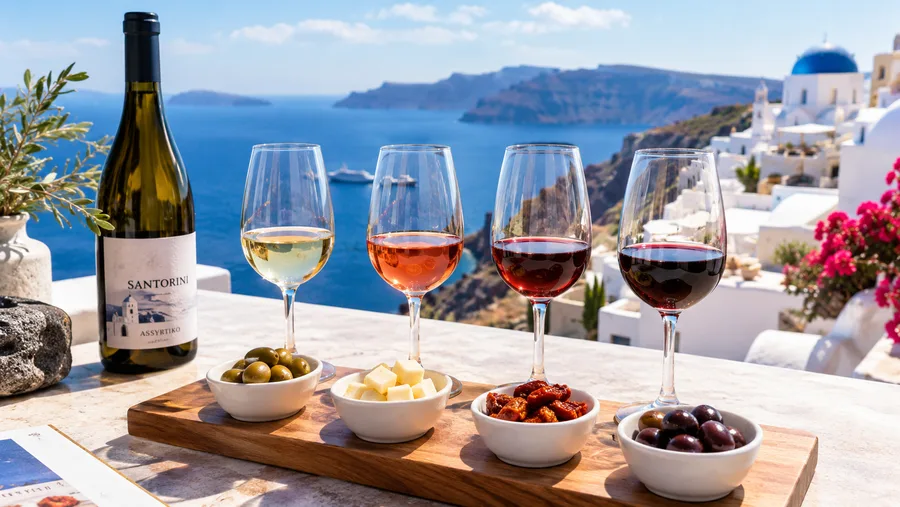
While Assyrtiko grabs the headlines, two other native white grapes play vital roles in traditional wines of santorini. Athiri and Aidani have grown alongside Assyrtiko for centuries, originally planted in the same parcels to soften its sharp edges. Under modern PDO rules, dry whites labeled Santorini must contain at least 85 percent Assyrtiko, with Athiri and Aidani making up the balance, though single-varietal expressions are popping up more frequently now.
Aidani is the floral diplomat. It has lower acidity than Assyrtiko, with soft aromas of jasmine, white peach, wild herbs, and orange blossom. When blended, even a splash of Aidani takes the aggressive bite out of a young Assyrtiko, giving the wine a perfumed nose and rounder mid-palate weight. A few producers, like Hatzidakis, bottle pure Aidani, and finding one is a treat if you prefer aromatic wines that avoid harsh tartness.
Athiri ripens earlier in the summer, usually late July or early August. It yields lower alcohol and mild citrus flavors, acting as a gentle blending partner. It does not carry the mineral weight of its neighbors, but it adds freshness and approachable fruit. Honestly, pure Athiri can feel a bit ordinary on its own, but as a component in classic white blends, it plays its quiet role well.
Book your santorini wine tasting experience:
The Rare Reds: Mavrotragano and Mandilaria
Red wine on a sun-bleached volcanic rock sounds like an afterthought. For a long time, it basically was. Red vines made up less than 10 percent of the island's plantings, mostly grown for rustic home consumption or bulk sales. That changed in the late 1990s when visionary winemakers like Paris Sigalas refused to let native red varieties disappear.
Mavrotragano is the star here. Its name translates roughly to "black and crisp," describing the thick skins of its tiny berries. Two decades ago, Mavrotragano was nearly extinct, scattered across forgotten fields in Akrotiri and Exo Gonia. Today, it produces some of the most exciting, expensive red wine from Santorini. It smells of dried cherries, dark cocoa, forest floor, black pepper, and warm leather, held together by firm, grippy tannins and bright acidity.
Pro tip: If you spot a single-vineyard Mavrotragano on a taverna list for under €50, order it without hesitating. Production across the entire island is minuscule, and local bottles disappear from cellars long before autumn arrives.
Mandilaria is the other notable red grape, famous for throwing massive color and abrasive tannins. Historically, farmers blended Mandilaria with white grapes just to soften its mouth-drying grip. When vinified alone, it requires gentle extraction and long oak aging to tame its wild, rustic character. It smells of sun-dried tomato, sour plum, and dusty tobacco. If you are exploring the island, stop into some of the best wineries in Santorini to sample Mavrotragano and Mandilaria side by side; the contrast between them is startling.
If you prefer not to navigate the narrow roads yourself between tastings, booking one of the reputable best Santorini wine tours is an easy way to taste these small-batch reds directly from barrel rooms that do not usually cater to casual walk-ins.
Comparing Santorini Grape Varieties and Profiles
To help you navigate a Greek wine list without getting lost in unfamiliar Greek syllables, here is how the primary native grapes stack up against one another in style, weight, and general table presence.
| Grape Variety | Color | Primary Flavor Profile | Acidity Level | Typical Alcohol | Best Food Pairing |
|---|---|---|---|---|---|
| Assyrtiko | White | Lemon juice, flint, sea salt, grapefruit | Very High | 13.5% - 14.5% | Sea bass, grilled squid, tomato fritters |
| Aidani | White | Jasmine, orange peel, pear, chamomile | Medium | 12.5% - 13.5% | Herb-roasted poultry, soft goat cheese |
| Athiri | White | Green apple, lime blossom, white peach | Medium-Low | 12.0% - 13.0% | Meze platters, fried whitebait |
| Mavrotragano | Red | Blackberry, leather, clove, dark chocolate | Medium-High | 13.5% - 14.5% | Slow-roasted lamb, aged graviera cheese |
| Mandilaria | Red | Wild berries, wet leather, dried fig, tobacco | Medium | 12.5% - 13.5% | Beef stifado, rich tomato-based stews |
Historic Styles: Understanding Nykteri and Vinsanto
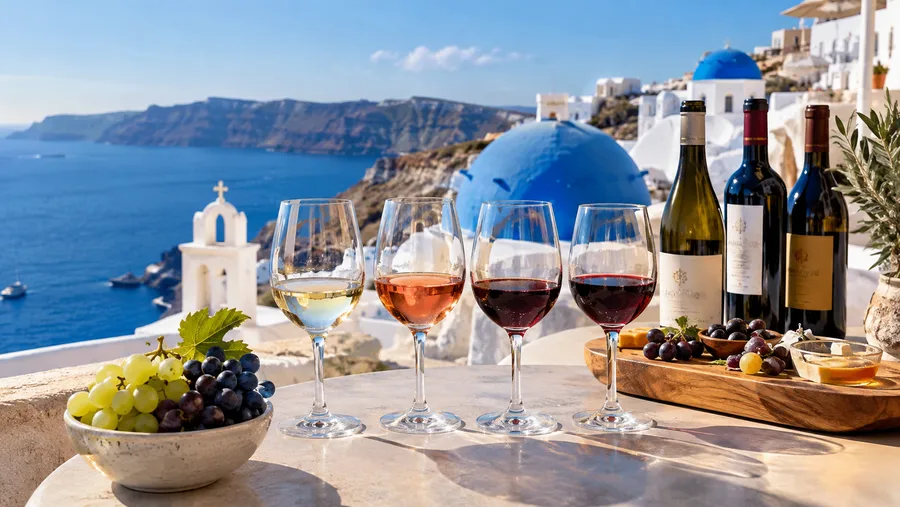
Beyond modern varietal bottlings, the island produces two historic wine styles rooted deep in Aegean trading traditions: Nykteri and Vinsanto. Both showcase how islanders turned harsh weather into wine gold long before stainless steel tanks arrived.
Nykteri takes its name from nychta, the Greek word for night. Historically, pickers harvested overripe grapes in the late afternoon and pressed them through the cool night hours to prevent oxidation in the scorching summer heat. By morning, fermentation was underway. Traditional Nykteri had to be aged in old oak casks for at least three months, though most producers now age it much longer. The result is a golden, muscular white with at least 13.5 percent alcohol, often creeping up past 15 percent.
Modern Nykteri must contain at least 85 percent Assyrtiko, blended with Athiri and Aidani. It tastes completely different from standard crisp dry whites. You get dried citrus peel, toasted almonds, ripe apricot, and a heavy, oily texture on the tongue, cut cleanly through the center by Assyrtiko's stubborn acid line. It is not an aperitif wine. Drink it with rich food like roasted pork or lobster pasta.
Then there is Vinsanto, the legendary sweet nectar of santorini wines. Do not confuse it with Tuscan Vin Santo; the Greek name likely comes from "Vino di Santorini." Production requires ridiculous amounts of labor and fruit. Growers harvest Assyrtiko and Aidani grapes at peak ripeness, then spread the bunches out on flat rooftops and burlap sheets across the fields to dry under the Aegean sun for 12 to 14 days.
- Sun-drying concentration: the sun evaporates water from the berries, concentrating sugars, acids, and flavors into sticky raisins.
- Slow fermentation: because the juice is dense with natural sugar, wild yeasts take months or even years to finish fermenting.
- Oak aging rules: PDO regulations require Vinsanto to age in oak barrels for at least 24 months, though many producers leave them for 4, 10, or 20 years.
- Tasting notes: dark amber in the glass, smelling of dates, dried figs, molasses, espresso beans, candied orange, and honey.
The beauty of real Vinsanto is that it never tastes cloying or sticky. Even when sugar levels reach 200 grams per liter, Assyrtiko provides an electric spine of acidity that leaves your mouth fresh. It is easily one of the world's great dessert wines, standing proudly alongside vintage Tokaji and Sauternes.
Frequently Asked Questions about santorini wine
Is santorini wine mostly sweet or dry?
The vast majority of wine produced on the island today is bone-dry white wine, primarily made from the Assyrtiko grape. While the island is world-famous for its sweet Vinsanto, dry wines account for over 85 percent of total annual production across the wineries.
Why is wine from Santorini so acidic?
Assyrtiko naturally maintains high tartaric acid levels during ripening, even under intense heat. Combined with mineral-heavy volcanic soil that lacks potassium, the grapes produce intensely crisp, mouth-watering wines with very low pH levels compared to most warm-climate Mediterranean regions.
Can you age Greek wine from Santorini?
Yes, especially high-end Assyrtiko and Nykteri. Because of their concentrated fruit extract and razor-sharp acidity, quality dry whites can easily age 5 to 10 years, developing nutty, honeyed tertiary notes. Vinsanto can age for several decades without losing its freshness.
Quick Reference
- Principal grape: Assyrtiko (approx 80% of plantings)
- Vine training: Kouloura basket method
- Soil profile: Volcanic ash, pumice, basalt (no clay)
- Sweet wine: Vinsanto (sun-dried white grapes)
- Average annual rainfall: under 350 mm
Book your santorini wine tasting experience:
The Bottom Line
Drinking wines of santorini greece is less about sipping a pleasant fruit beverage and more about experiencing raw geography in a glass. The winds, the drought, and the volcanic soil are all right there, unapologetic and sharp. Next time you sit down at an island taverna or browse the Mediterranean shelves of your local bottle shop, skip the generic imports and ask for a cold bottle of Assyrtiko or a pour of aged Vinsanto. Your palate will never look at white wine the same way again.
Read more about santorini wine tasting.